Alexandre Dumas
Works
1 in the collection, in order of publication
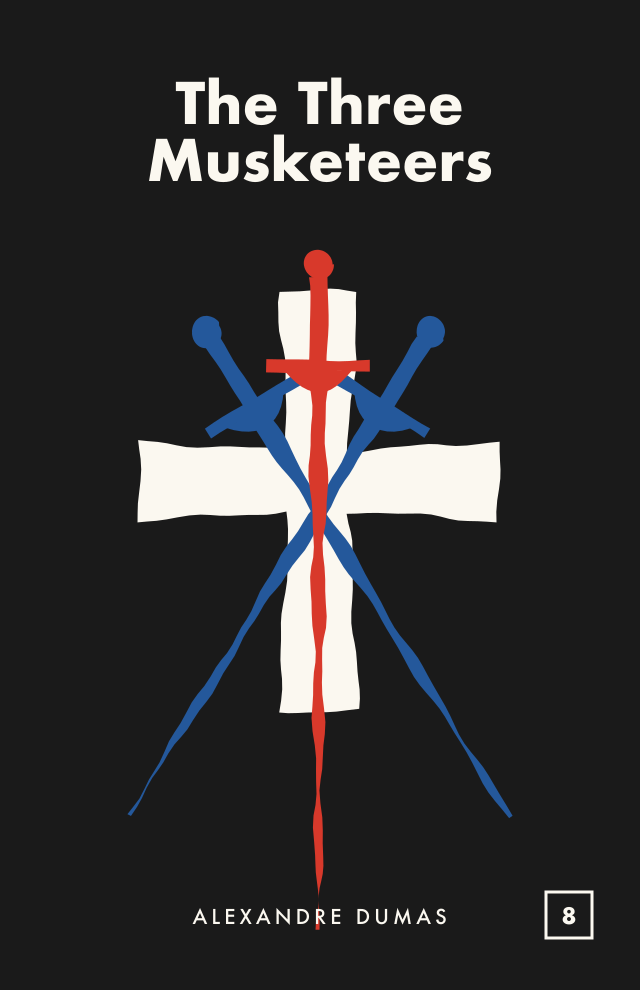
The Three Musketeers
1844 · Novel
Not yet on Entold
- Henry III and His Court 1829 · Play
- Antony 1831 · Play
- The Tower of Nesle 1832 · Play
- Travels in Switzerland 1833–1837 · Book
- Pauline 1838 · Novel
- The Conspirators 1842 · Novel
- Georges 1843 · Novel
- The Corsican Brothers 1844 · Novella
- The Count of Monte Cristo 1845–1846 · Novel
- Twenty Years After 1845 · Novel
- Queen Margot 1845 · Novel
- The Knight of Maison-Rouge 1846 · Novel
- The Lady of Monsoreau 1846 · Novel
- Joseph Balsamo 1846–1848 · Novel
- The Forty-Five Guardsmen 1847–1848 · Novel
- The Vicomte de Bragelonne 1847–1850 · Novel
- A Thousand and One Ghosts 1849 · Collection
- The Queen’s Necklace 1849–1850 · Novel
- The Black Tulip 1850 · Novel
- Ange Pitou 1850–1851 · Novel
- My Memoirs 1852–1856 · Book
- The Countess de Charny 1852–1855 · Novel
- The Mohicans of Paris 1854–1859 · Novel
- The Companions of Jehu 1857 · Novel
- The Wolf Leader 1857 · Novel
- La San Felice 1864–1865 · Novel
- The Whites and the Blues 1867–1868 · Novel
- Grand Dictionary of Cuisine 1873 · Book
- The Knight of Sainte-Hermine 2005 · Unfinished
Reading guide
Dumas offers several ways in: the companionship of the musketeers, the long design of a revenge story, or a shorter encounter with the uncanny. Choose the scale and mood that appeal to you, then follow the musketeers into their more divided middle years.
Start here
The Three Musketeers
The quick dialogue and the uneasy friendship between d’Artagnan and his new companions make this a lively introduction to Dumas’s storytelling. Let the comedy sit beside the danger: the characters’ courage and loyalty do not make their choices simple.
In the collection · About 15 hr 15 min at 250 words per minute
For a shorter adventure
The Corsican Brothers
This compact story moves between Corsica and Paris without the large cast of the historical sequences. Its traveller’s voice and uncanny bond between the twins offer a different route into Dumas’s interest in honour, violence and the demands of family.
Not yet in the collection
For a long story of revenge
The Count of Monte Cristo
Choose this if you enjoy watching hidden connections and carefully prepared plans emerge across a substantial novel. The suspense grows through changes of identity and encounters whose meaning becomes clearer over time, so give its broad cast room to develop.
Not yet in the collection
Read next
Twenty Years After
After The Three Musketeers, return to the friends when age and political allegiance have pulled them in different directions. The familiar repartee now carries the added weight of memory and disagreement, making the sequel a useful way to see how Dumas changes the terms of an adventure.
Not yet in the collection
Biography
Alexandre Dumas was a French novelist and dramatist whose adventures turn friendship, ambition and revenge into stories of divided loyalties. His characters move through courts, prisons and conspiracies, with brisk dialogue and plots that bring private desires into conflict with public events. The Three Musketeers and The Count of Monte Cristo are his best-known novels; their humour, suspense and moral complications also run through his longer historical sequences. He is often called Dumas père to distinguish him from his son, the novelist and playwright Alexandre Dumas fils.
Born in Villers-Cotterêts in 1802, Dumas was the son of General Thomas-Alexandre Dumas, whose parents were a French nobleman and an enslaved Black woman in Saint-Domingue. He moved to Paris in 1823 and established himself in the Romantic theatre with Henry III and His Court and Antony. His later novels often appeared in newspaper instalments, and many were written in collaboration with Auguste Maquet, who contributed historical research and narrative drafts.
Dumas also wrote travel accounts, memoirs and food writing. His journeys took him across Europe and to North Africa, Russia and the Caucasus; in Italy he supported Garibaldi and worked as a journalist in Naples. He died at Puys, near Dieppe, in 1870. His Grand Dictionary of Cuisine, published after his death, brings recipes together with anecdotes and the curiosity about people and places that animates his fiction.
- Born
- 1802
- Died
- 1870
- On Entold
- 1 of 30 works